What metrics should be monitored at a loading dock using existing cameras?
A warehouse uses its existing cameras to generate four categories of metrics: space occupancy, time spent at each stage, vehicle and pedestrian traffic, and compliance with safety rules in high-risk areas. All of these metrics are calculated without identifying any individuals, based on data already available, provided that the camera’s field of view actually covers the area to be measured.
The limitation is almost never software-related. It stems from the way the cameras were installed—to monitor access points rather than to measure activity. Knowing from the outset what can be measured with the existing infrastructure—and what would require reorientation or additional equipment—prevents launching a project based on an unrealistic promise.
Which areas of a warehouse lend themselves to measurement?
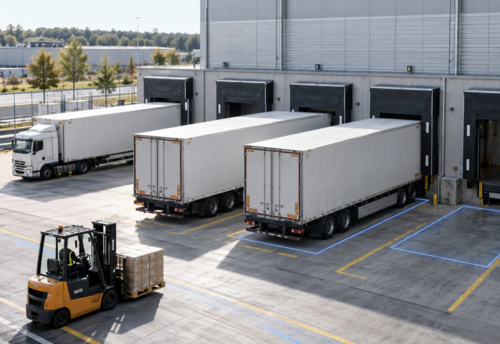
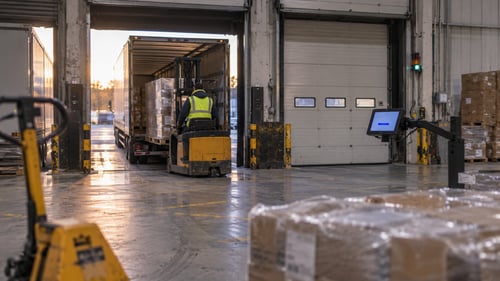
Loading docks are the most suitable areas for measurement because there are many cameras there and the activity is easy to track: the presence of a vehicle at the door, the duration of the operation, and the time elapsed between arrival and the start of processing.
Traffic aisles come next. A camera positioned high up along the centerline of an aisle can count vehicle passages, detect frequent encounters with pedestrians, and identify bottlenecks.
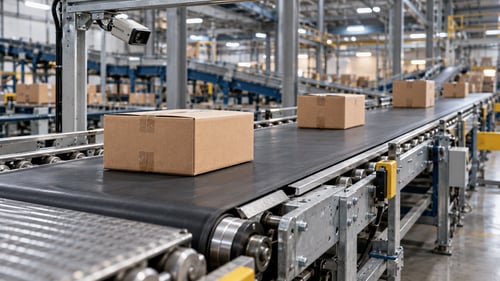
Occupancy in the preparation and consolidation areas can be measured: the actual area used, the saturation of floor spaces, and the duration that pallets remain parked while waiting. High-bay storage areas, on the other hand, are poorly suited to conventional video analysis because the required view would be vertical, and existing cameras do not provide it.
Which indicators can actually be calculated?
On loading docks: occupancy rate per door, average dwell time of a vehicle, time between docking and the first movement, percentage of time a door remains occupied without visible activity.
Regarding traffic: number of vehicle passes per aisle and per slot, number of instances where a vehicle and a pedestrian share the same area, hourly distribution of internal traffic peaks.
Regarding floor space: occupied area relative to available area; duration of a handling unit’s presence at a location; time before evacuation from a buffer zone.
Regarding safety: crossing a designated zone, presence within a perimeter during a vehicle operation, use of a marked pedestrian crossing. These metrics serve as preventive indicators and as a basis for discussion with teams. They are not a tool for individual monitoring and must not be presented as such.
What existing cameras cannot measure
Four expectations come up regularly but are limited by the current equipment.
- Reliable reading of references or labels on packages, which requires a resolution and working distance that surveillance cameras do not provide.
- Accurate counting of items at height within a rack, due to the lack of a vertical view.
- Tracking a single pallet from one end of the site to the other, which would require continuous coverage without blind spots.
- Detailed measurement of handling movements, which requires a frame rate higher than that typically configured on a video surveillance system.
Best practice is to have the system assessed frame by frame before deployment: measurable as-is, measurable after reorientation, or not measurable. This assessment is more valuable than a general promise of compatibility.
How these measurements integrate with the warehouse management system
The warehouse management system knows what has been reported: a recorded receipt, a completed order pick, a validated shipment. Video captures what physically happened in the space, including downtime that isn’t reflected in any data entries.
The value of the reconciliation lies precisely in this discrepancy. A door reported as clear at 11:00 a.m. but still visually occupied at 11:20 a.m. indicates either a delay in recording or a vehicle that is parked after unloading. The two situations require different actions, and neither is visible in the management system alone.
Technically, the reconciliation requires a common clock and a door identifier shared between the two systems. These are the two points to verify first, before any discussion of the metrics.
What legal framework applies in a warehouse?
A warehouse is first and foremost a workplace, not a place open to the public. Therefore, the prefectural authorization requirements specific to video surveillance in places open to the public do not apply to internal areas, though this in no way reduces other obligations.
The Labor Code requires that employee representative bodies be informed and consulted before implementing a system to monitor employee activity, as well as that the individuals concerned be personally informed. This step is a prerequisite for the system’s admissibility and must be prepared prior to deployment.
The General Data Protection Regulation applies as soon as a person is identifiable in the image: a documented legal basis, notification, data minimization, justified retention period, and entry in the record. An impact assessment is required when the system amounts to large-scale, systematic surveillance of employees.
One point deserves to be explicitly clarified: the purpose. Measuring traffic flows and durations to determine the appropriate scale of an organization is an operational purpose. Evaluating the individual performance of a warehouse worker is another, significantly more intrusive purpose, and this distinction must be clearly defined in writing in the specifications from the outset.
Where to start?
Three steps are sufficient for an initial scope.
Choose an area where a decision requires measurement—most often the loading docks—and formulate the indicator as a verifiable statement. Have the available camera feeds for this area assessed, acknowledging that some may not be suitable. Define an acceptance threshold quantified by your teams, validated against manual counts during a few time slots.
CORE, the platform developed by XXII, analyzes footage from existing cameras and generates aggregated metrics on occupancy, duration, and foot traffic—without facial recognition or personal identification. For a warehouse, the key question remains the same regardless of the vendor: what views already exist, what metrics do they actually enable, and what decision should these metrics inform?